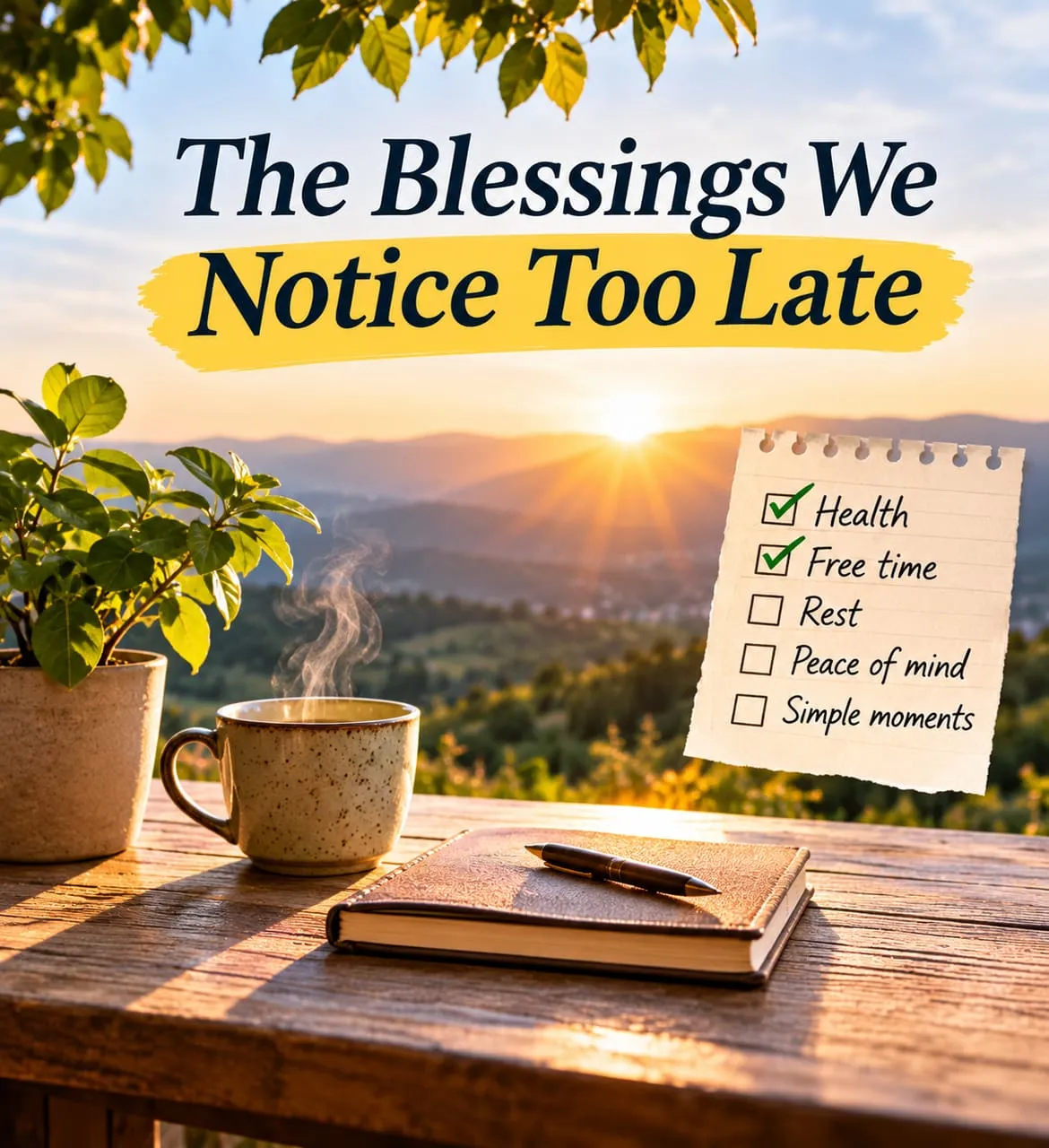
The Blessings We Notice Too Late
Human beings have a strange relationship with blessings. We often recognize their value only after they disappear. Good health feels ordinary—until illness arrives. Free time seems endless—until life becomes crowded with responsibilities. What was once ignored suddenly becomes precious.
This idea is captured powerfully in the well-known saying: “There are two blessings that many people waste: health and free time.” The statement is simple, yet deeply accurate. Some of the most valuable things in life are not dramatic or visible. They are quiet advantages that people become blind to precisely because they are always there.
Psychologists sometimes refer to this tendency as hedonic adaptation. People quickly get used to positive conditions. What once felt special becomes normal. A healthy body, peaceful time, stable routines—after a while, they no longer attract attention. The mind shifts focus toward what is missing rather than what is already present.
Modern life intensifies this problem. Many people live in a constant state of distraction. Free hours are filled automatically with scrolling, consuming content, or worrying about the future. Meanwhile, health is often treated as something permanent rather than temporary. Sleep is sacrificed, stress becomes normalized, and rest is postponed as if the body has unlimited reserves.
The irony is that people usually understand the value of these blessings intellectually. Everyone knows health matters. Everyone says time is precious. Yet knowledge alone does not always change behavior. Familiarity creates a false sense of permanence. People assume there will always be more time later, more energy later, better conditions later.
But life rarely works that way.
There is also a deeper psychological reason behind this blindness. Human attention is naturally drawn toward urgency rather than importance. Notifications, deadlines, and daily pressures demand immediate reactions, while long-term blessings remain in the background. Because health and free time do not always demand attention, they are easily neglected.
Only when they are interrupted do they become visible.
Someone loses their health and suddenly remembers what ordinary mornings once felt like. Someone becomes overwhelmed with responsibility and begins missing the simple freedom they once considered boring. In many cases, appreciation arrives late—after the blessing has already weakened or disappeared.
This does not mean people should live in fear of loss. Rather, it suggests the importance of awareness. Appreciating something while it still exists changes the way it is used. Time becomes more intentional. Health becomes something to protect instead of consume carelessly.
In the end, some of life’s greatest gifts are not the things we chase, but the things quietly supporting us every day. And perhaps wisdom begins when we stop treating these blessings as permanent background conditions—and start recognizing them while they are still ours.
Vocabulary from this article
precisely
adverb/prɪˈsaɪsli/
Exactly; used when you want to be accurate about a reason or detail.
hedonic
adjective/hiːˈdɒnɪk/
Related to pleasure; in psychology, getting used to good things so they feel normal.
adaptation
noun/ˌædæpˈteɪʃn/
The process of getting used to a new situation.
intensifies
verb/ɪnˈtensɪfaɪz/
Makes something stronger or more extreme.
sacrificed
verb/ˈsækrɪfaɪst/
Given up something important in order to do or get something else.
intellectually
adverb/ˌɪntəˈlektʃuəli/
In your mind; knowing something as an idea rather than feeling or doing it.
familiarity
noun/fəˌmɪliˈærəti/
The state of knowing something well because you have experienced it often.
permanence
noun/ˈpɜːmənəns/
The quality of lasting forever, or seeming to.
overwhelmed
adjective/ˌəʊvəˈwelmd/
Feeling unable to cope because there is too much to deal with.
carelessly
adverb/ˈkeələsli/
Without enough attention or care; in a way that can cause problems.
Which word matches this meaning?
Reading settings
Tone
Font
Margins